Sascha van Beemdelust
Profile
Industrial Designer
Sascha van Beemdelust
Profile
Industrial Designer
N’003-Luna
Glasses.
N’003-Luna
Glasses.
N’003-Luna
Glasses.
Luna Glasses: Turning night into day with night vision glasses for the visually impaired.
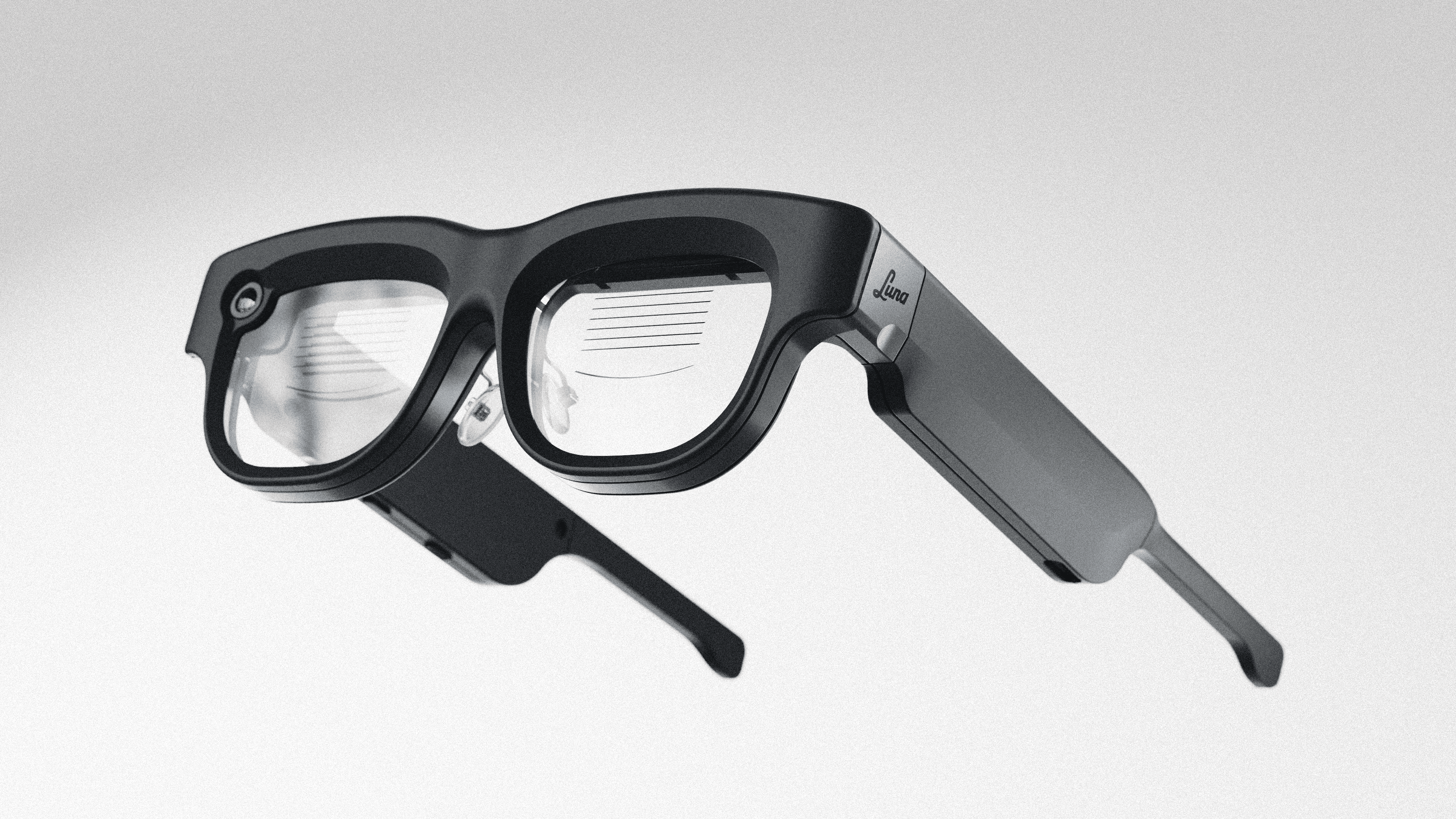
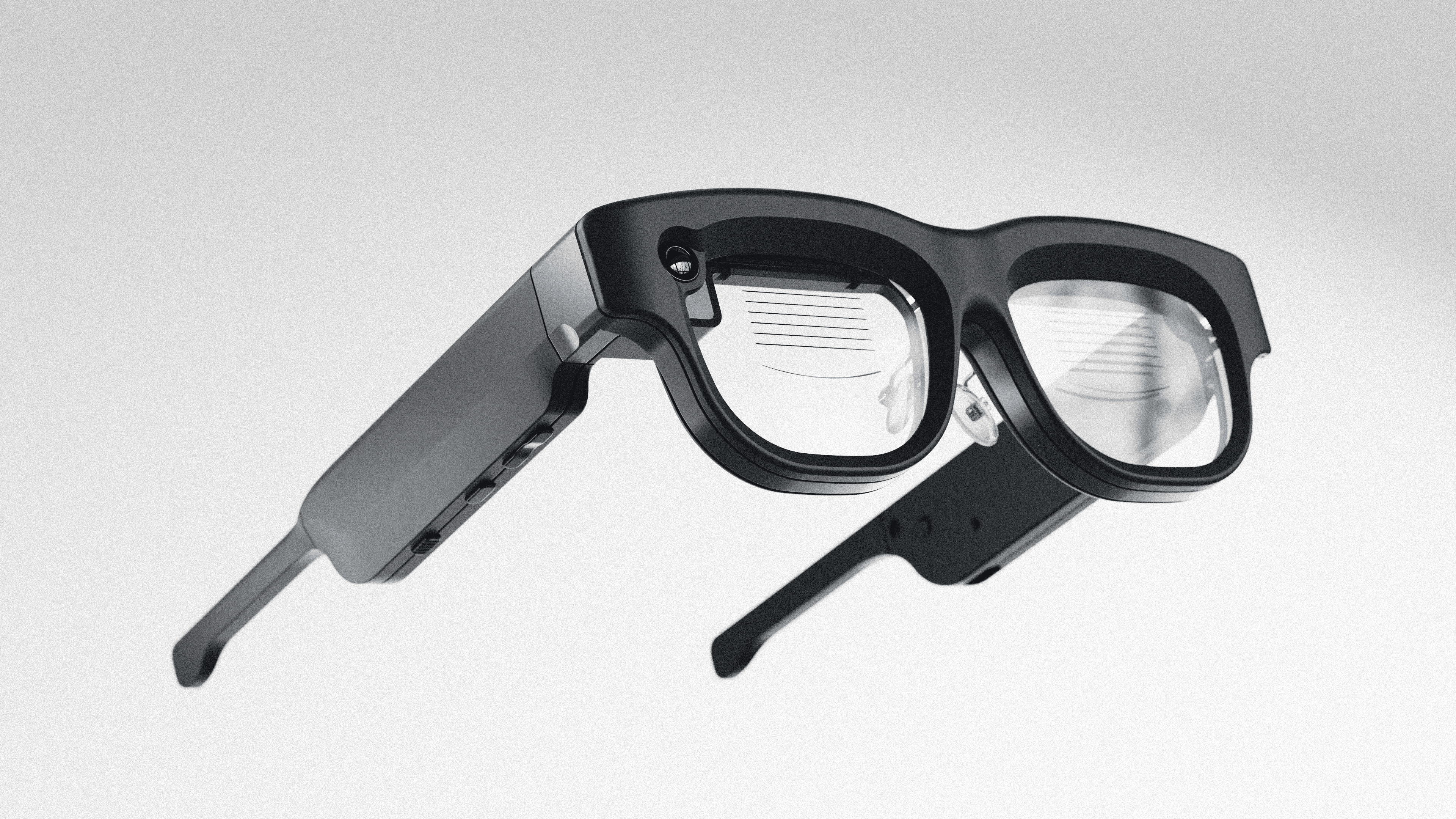
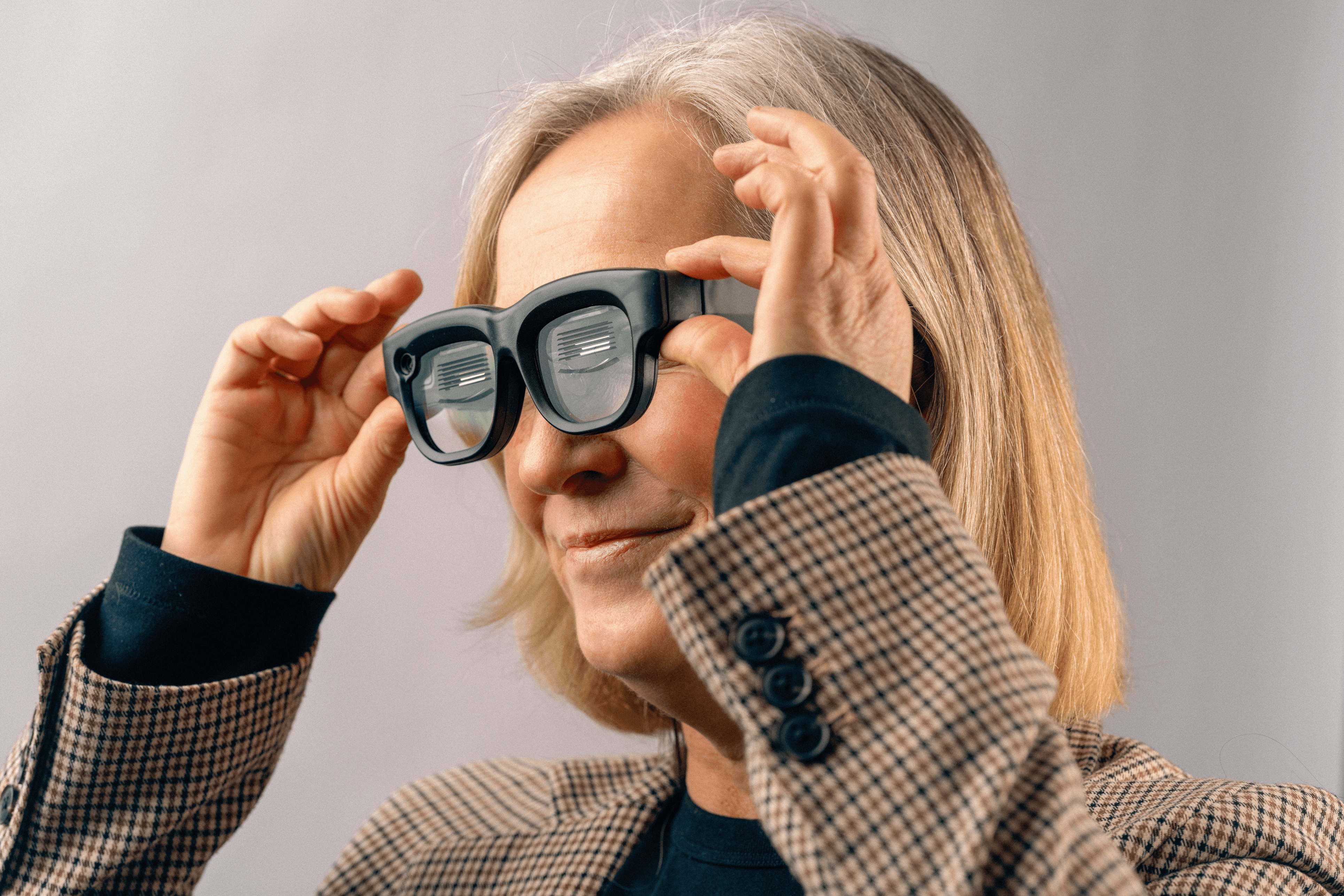
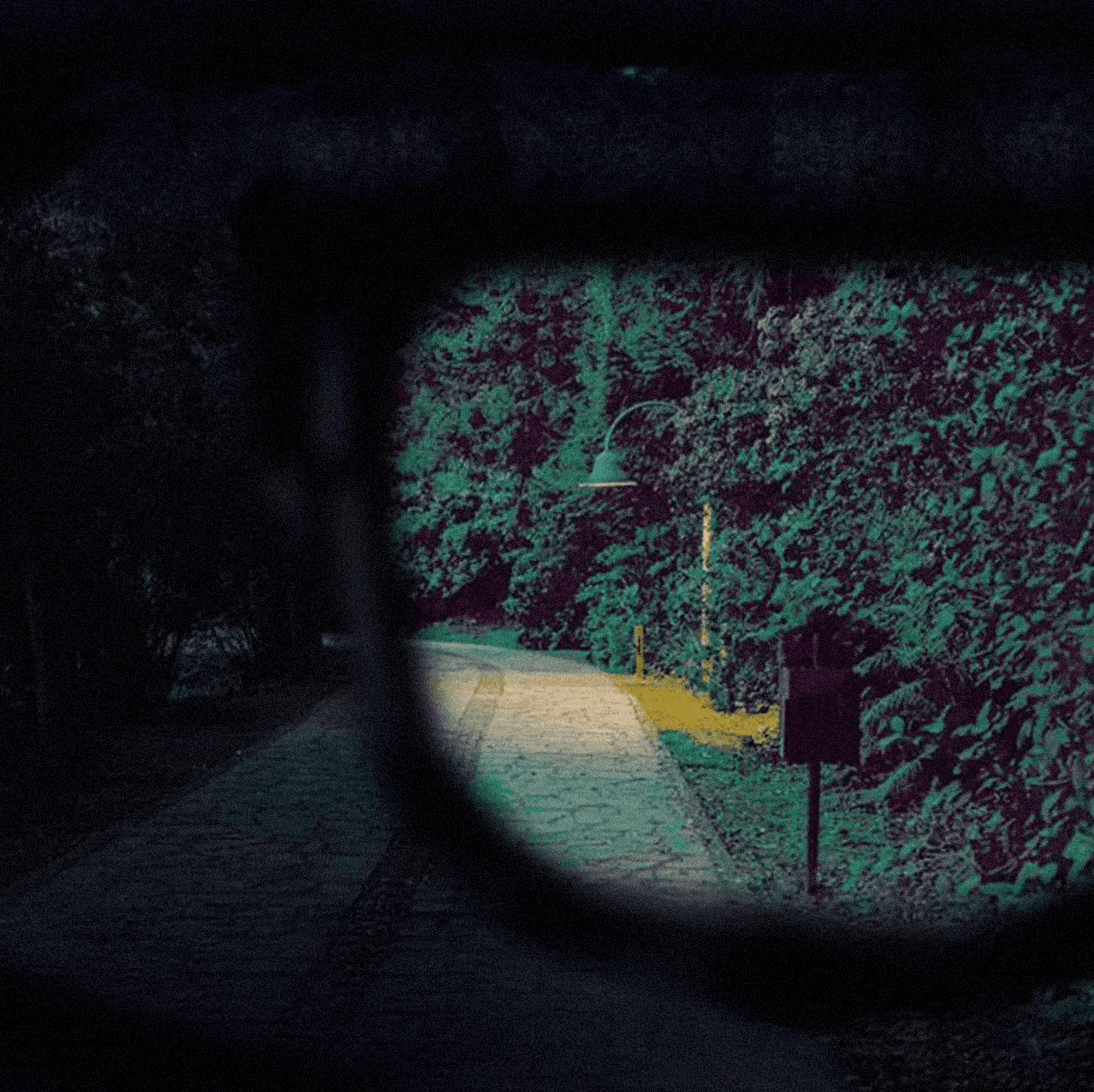
Luna Glasses are designed for people experiencing night blindness, offering a new way to navigate low-light environments with confidence. By combining a forward-facing camera with integrated projection lenses, the glasses capture and enhance the surrounding environment in real time. The system increases exposure and visual clarity, allowing users to perceive details that would otherwise be lost in darkness.
Process
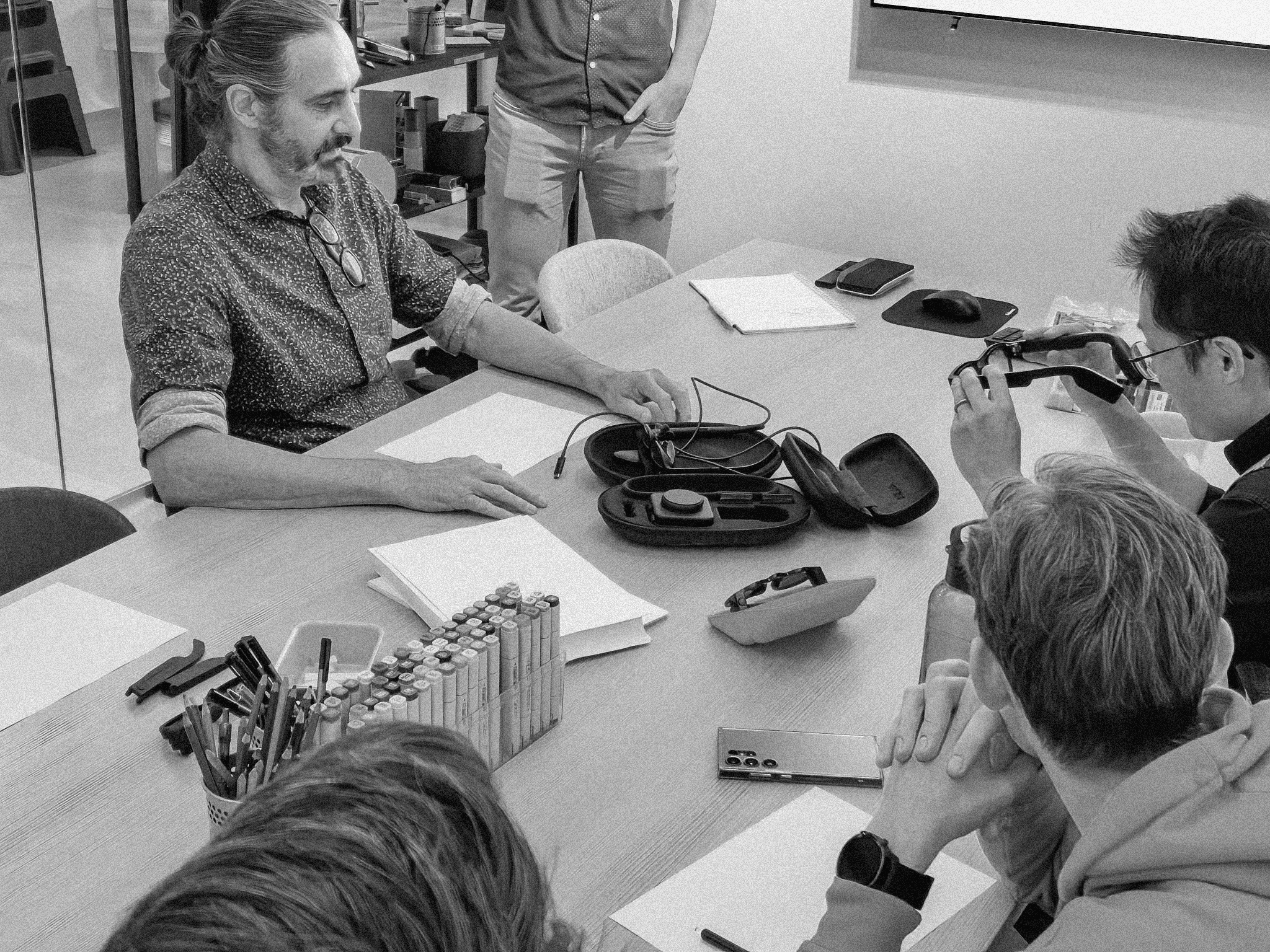
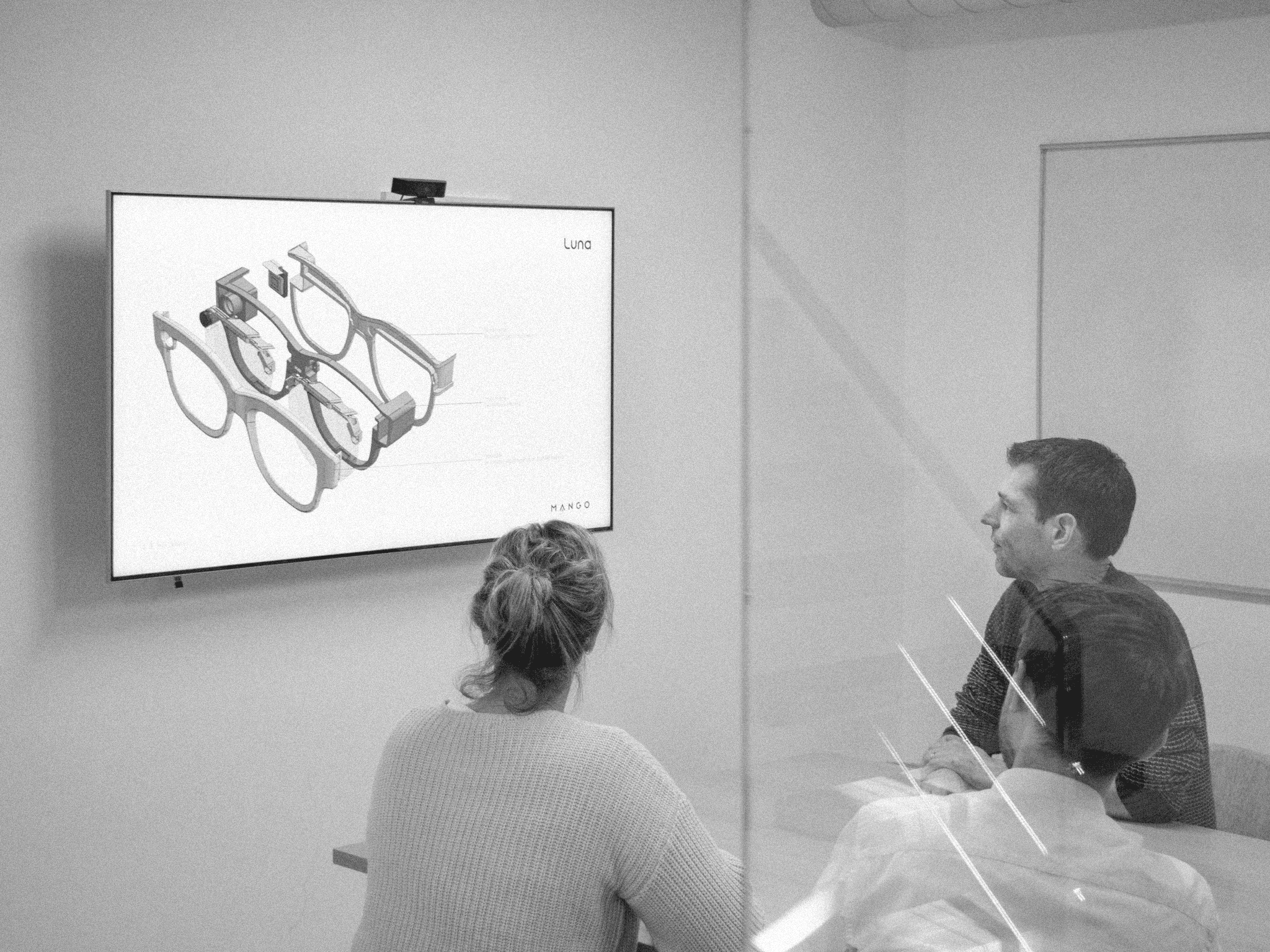
Initial exploration focused on analyzing comparable products and existing prototypes. This included teardown-style evaluation of similar devices to better understand component integration, spatial constraints, and assembly logic.
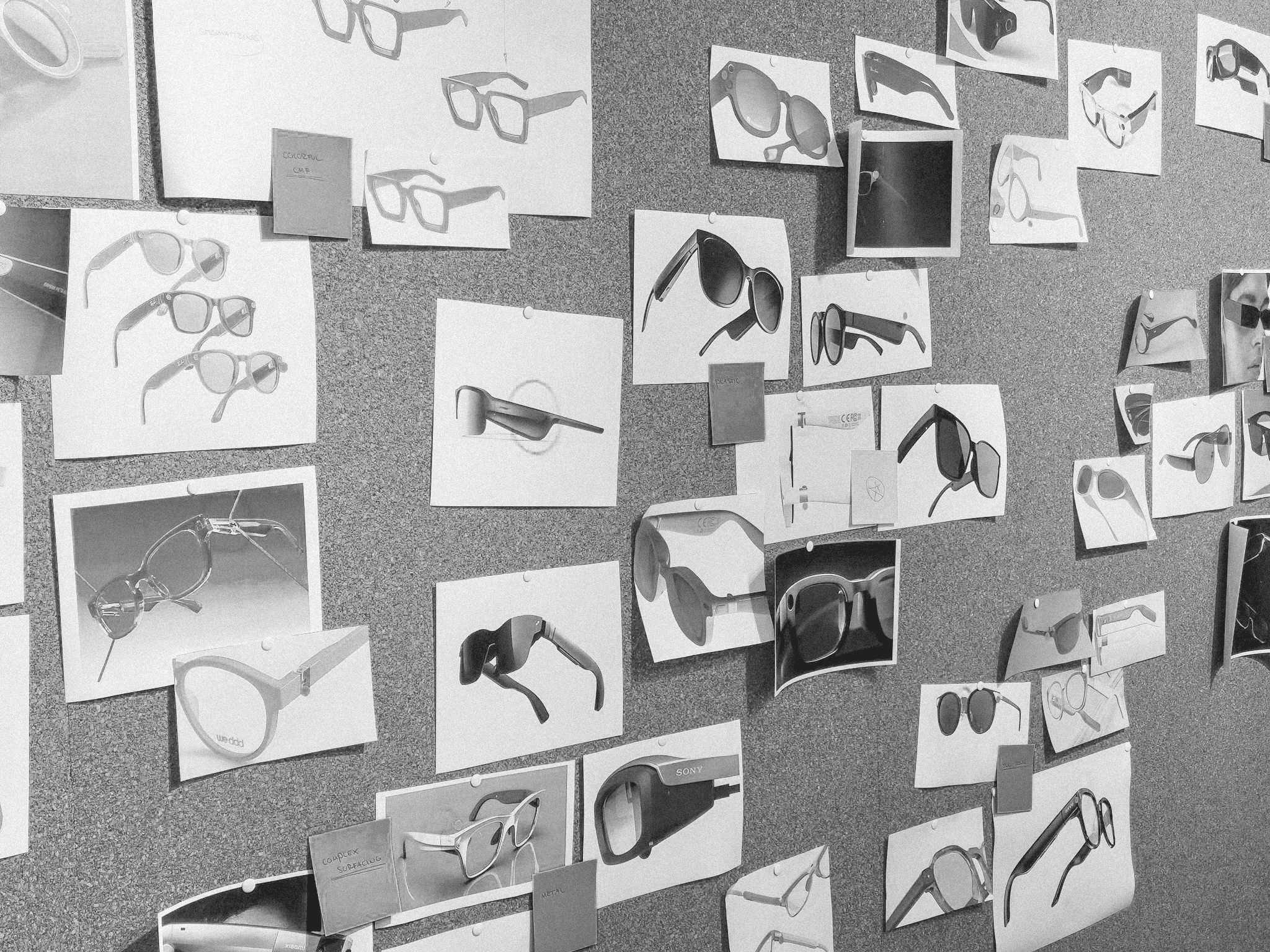
Parallel to this, early brainstorming sessions explored different strategies for balancing technical requirements with visual appeal. The goal was to identify opportunities to minimize perceived volume while maintaining usability and manufacturability.
CAD Development
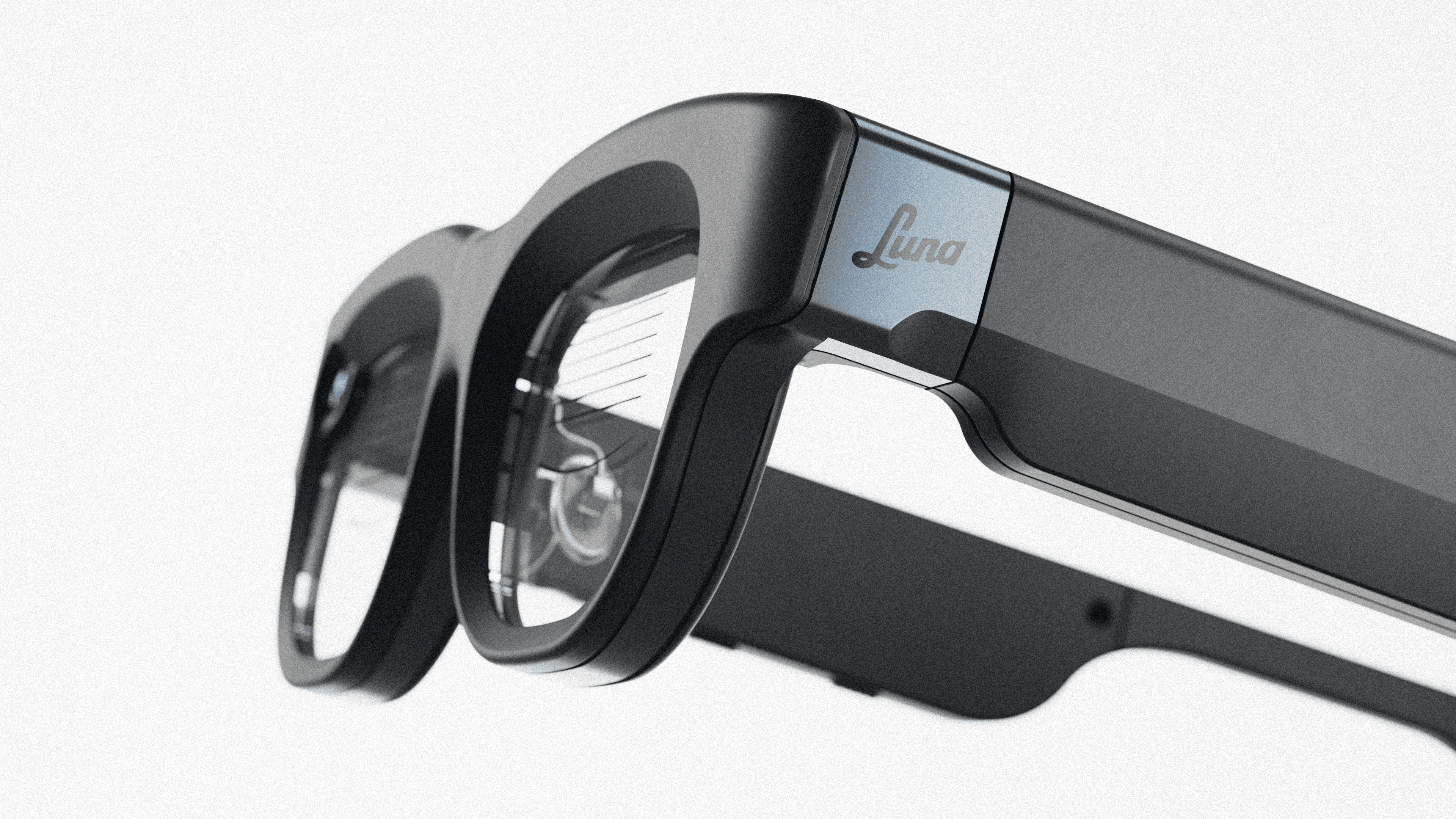
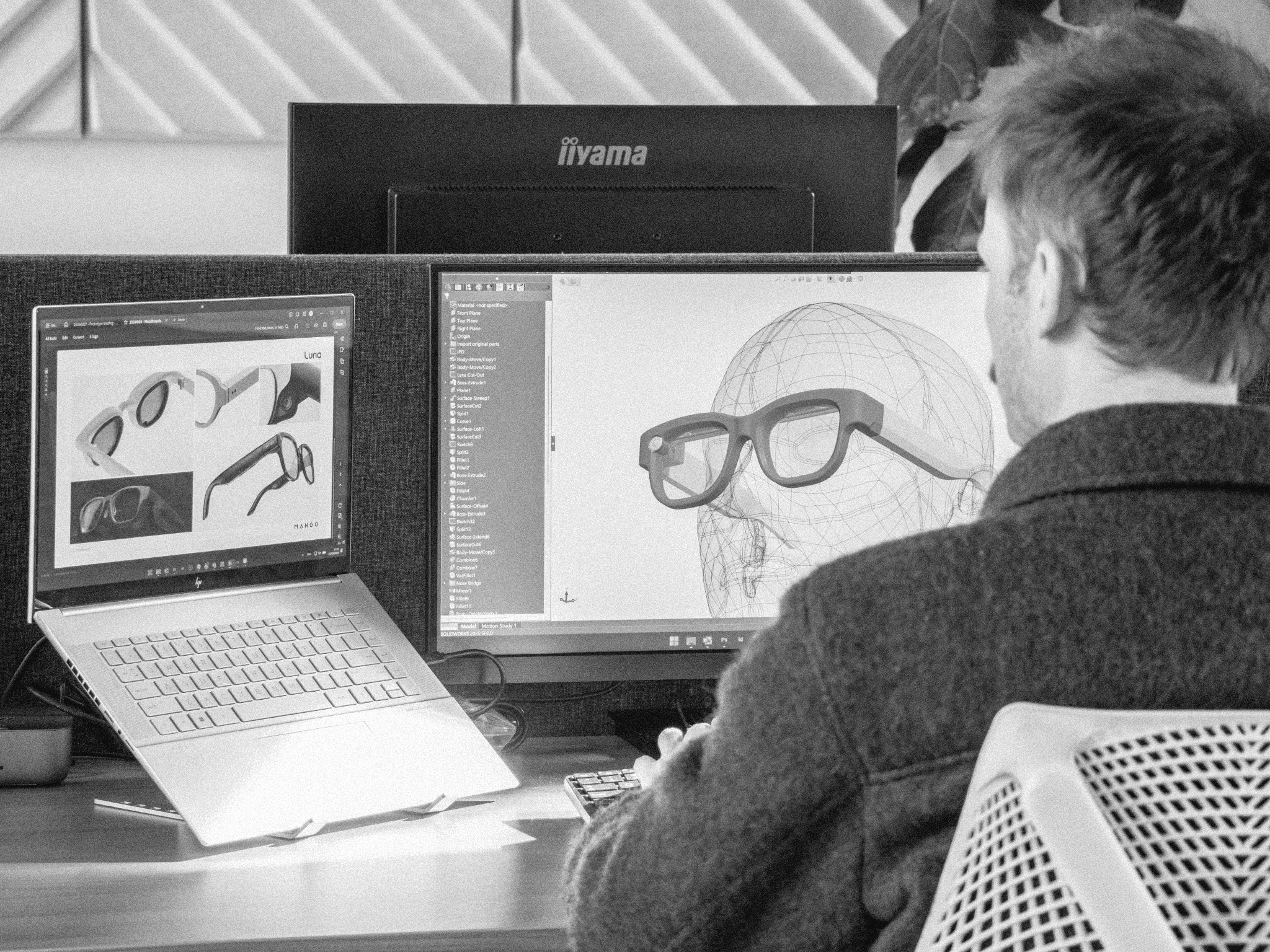
Surface modelling was used to create a controlled, compact form around fixed components. Subtle transitions and defined surfaces reduce visual bulk. Close collaboration with engineering ensured tight integration and a clean overall appearance.
Prototyping
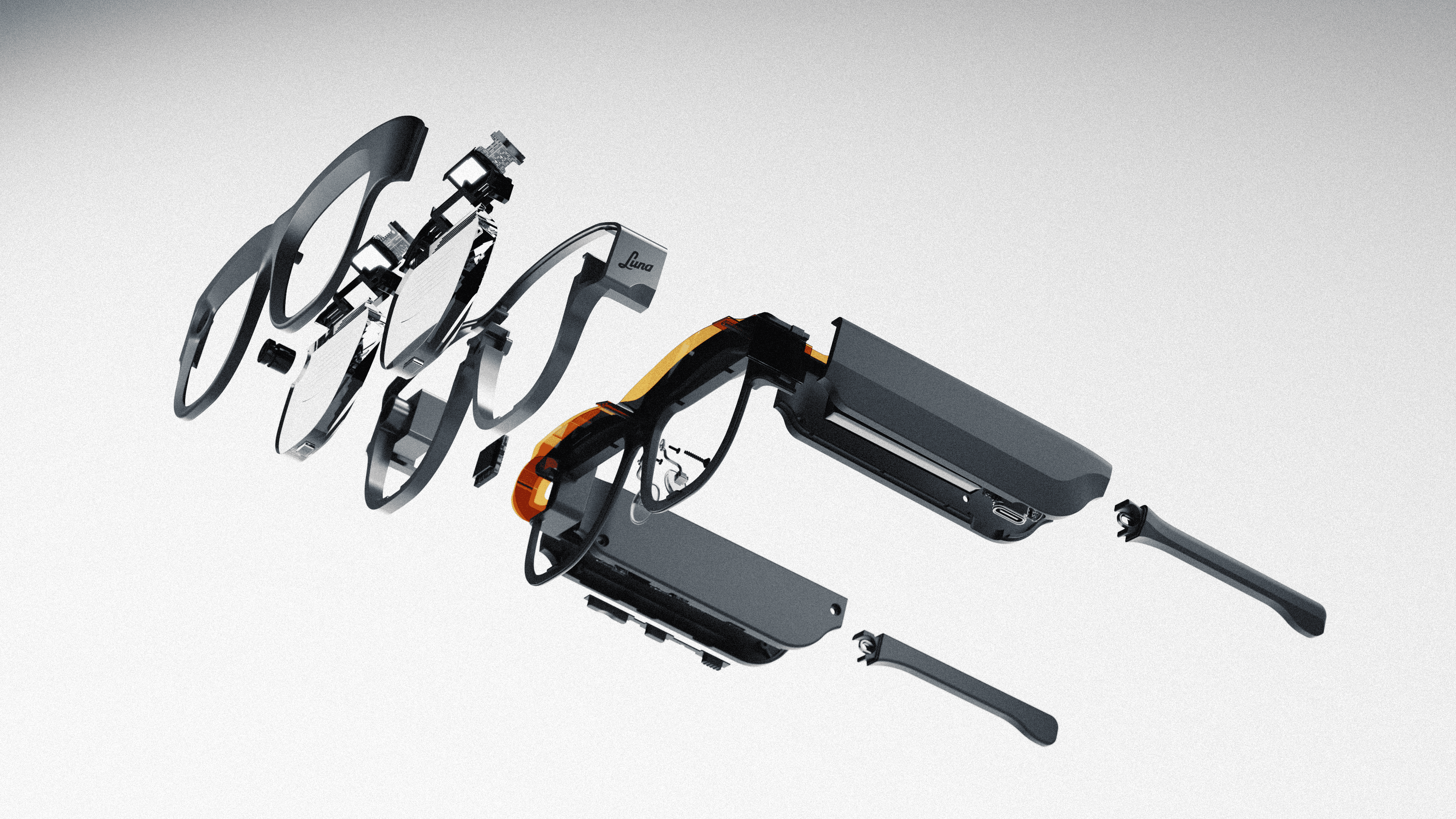
Design and engineering collaborated closely to translate the concept into a manufacturable product. An aluminium core forms both the structural backbone and assembly base, allowing components to be mounted efficiently while simplifying the build.
CMF
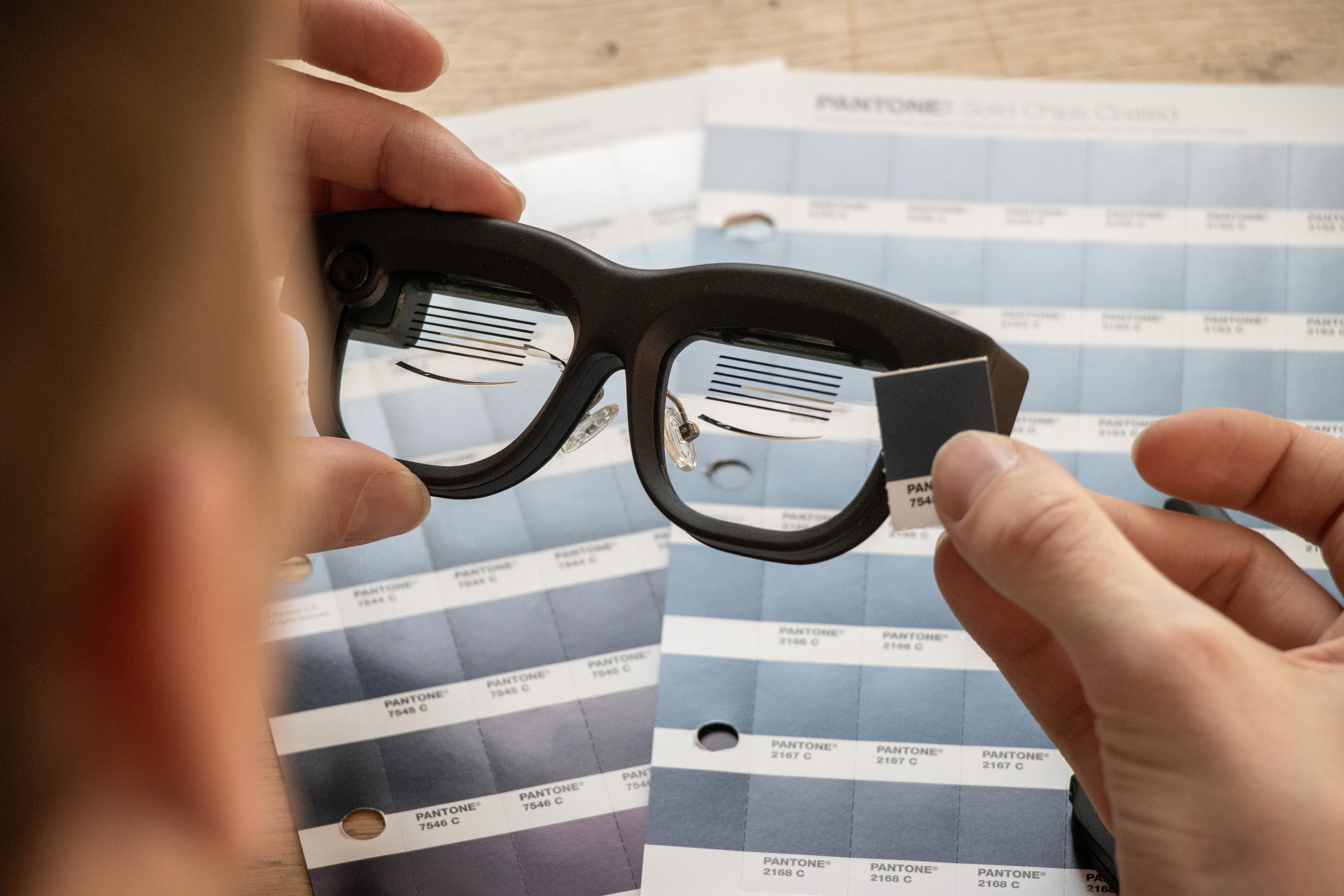
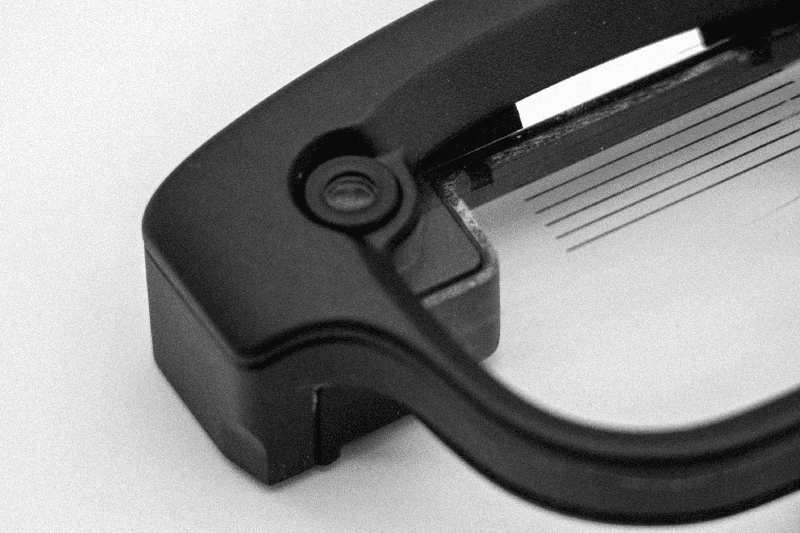
An anodized aluminium core provides both structure and a high-quality finish. Its subtle color and texture contrast with the surrounding plastic parts, breaking up the volume and reducing the perceived bulk. Subtle color and texture choices were used to communicate approachability while reflecting Luna’s innovative, high-tech identity.
Final Design
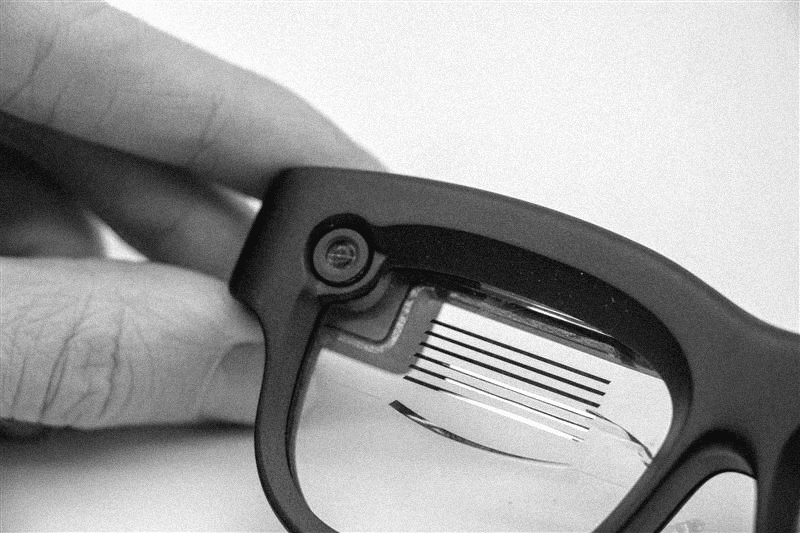
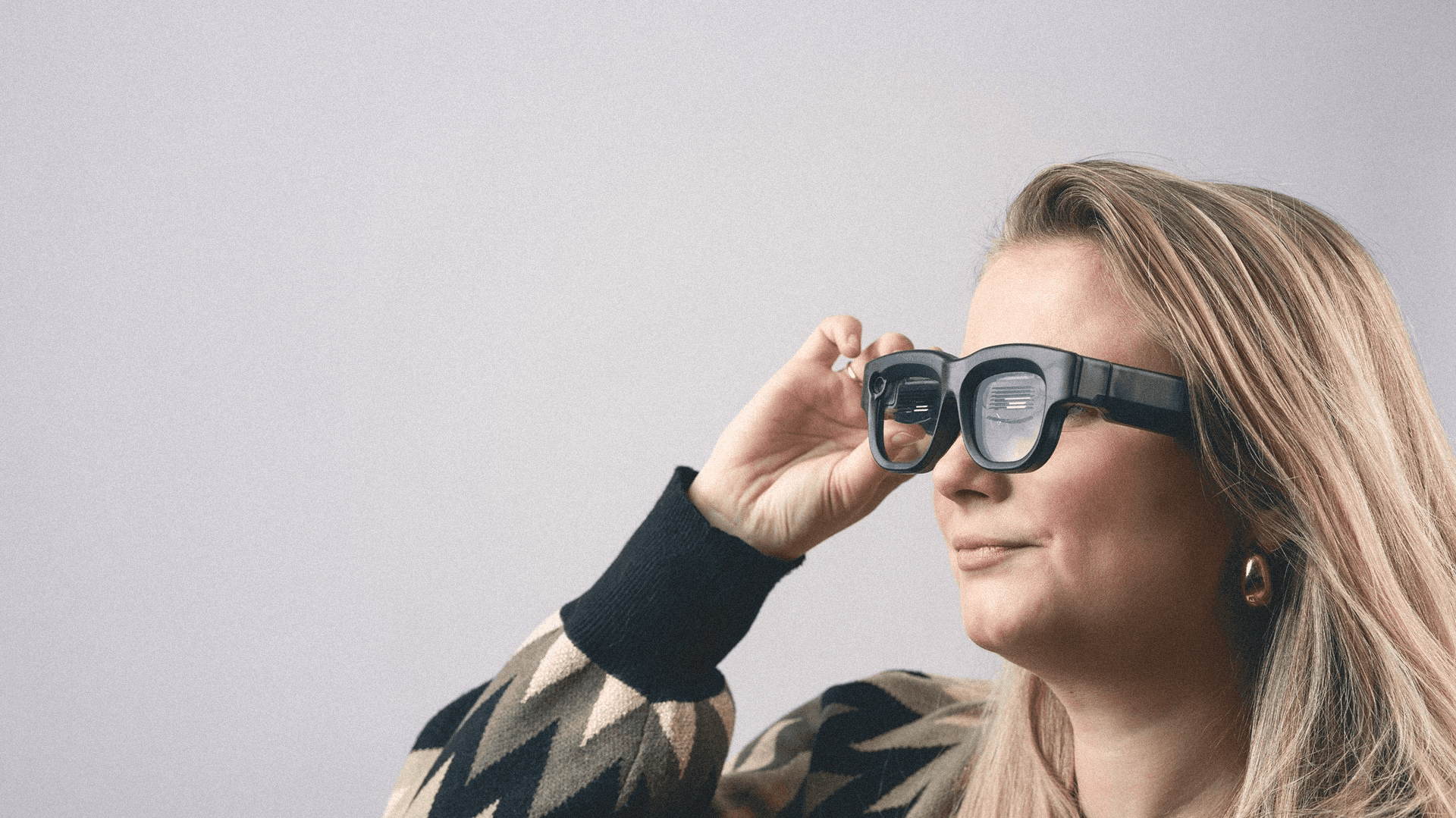
The final design translates the bulky prototype into a sleeker, wearable product, maintaining the original concept’s intent while ensuring manufacturability and comfort. Luna Glasses are now available for pre-order, bridging assistive technology with everyday eyewear.
Luna Glasses: Turning night into day with night vision glasses for the visually impaired.
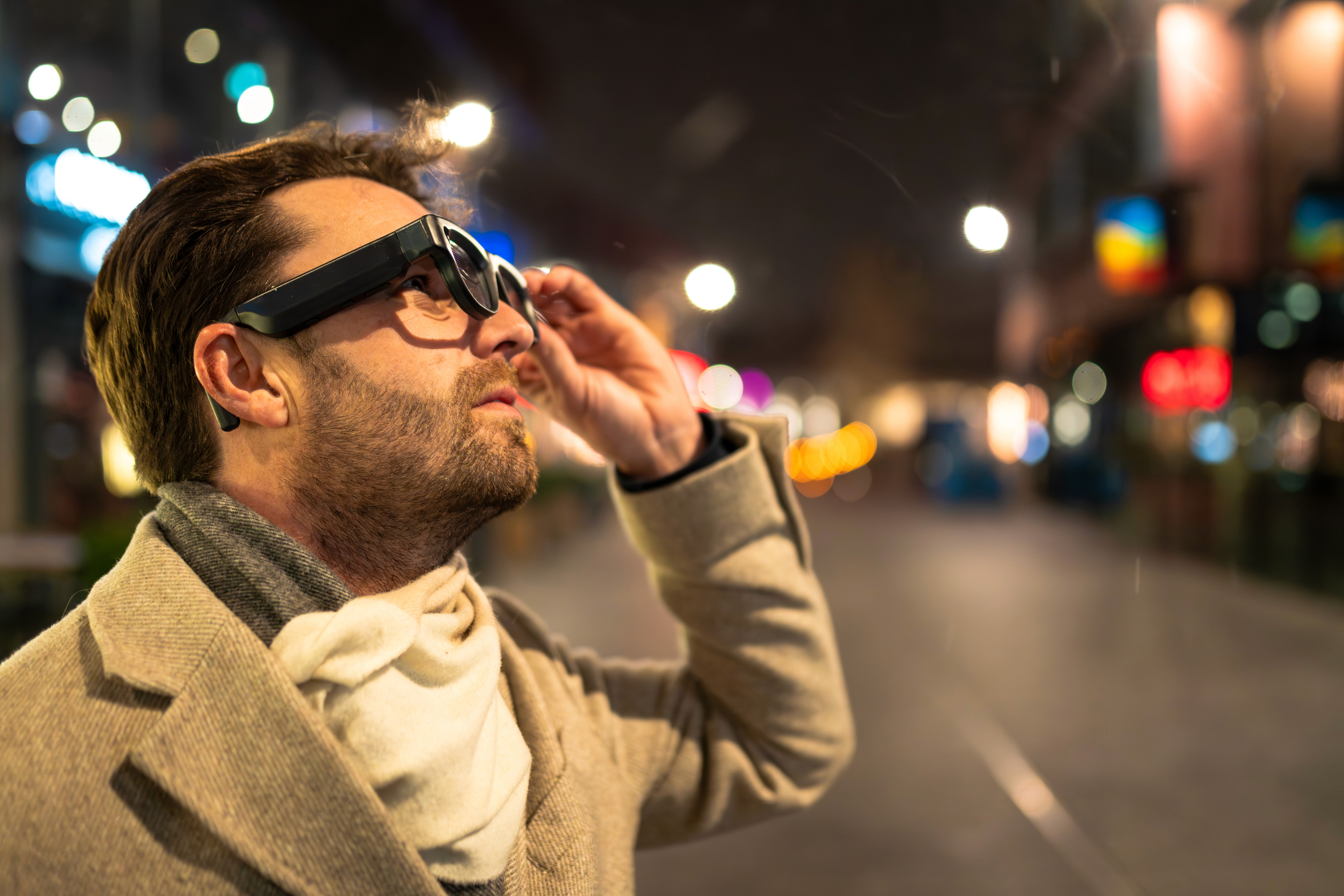
Luna Glasses are designed for people experiencing night blindness, offering a new way to navigate low-light environments with confidence. By combining a forward-facing camera with integrated projection lenses, the glasses capture and enhance the surrounding environment in real time. The system increases exposure and visual clarity, allowing users to perceive details that would otherwise be lost in darkness.
Process
Initial exploration focused on analyzing comparable products and existing prototypes. This included teardown-style evaluation of similar devices to better understand component integration, spatial constraints, and assembly logic.
Parallel to this, early brainstorming sessions explored different strategies for balancing technical requirements with visual appeal. The goal was to identify opportunities to minimize perceived volume while maintaining usability and manufacturability.
CAD Development
Surface modelling was used to create a controlled, compact form around fixed components. Subtle transitions and defined surfaces reduce visual bulk. Close collaboration with engineering ensured tight integration and a clean overall appearance.
Prototyping
Design and engineering collaborated closely to translate the concept into a manufacturable product. An aluminium core forms both the structural backbone and assembly base, allowing components to be mounted efficiently while simplifying the build.
CMF
An anodized aluminium core provides both structure and a high-quality finish. Its subtle color and texture contrast with the surrounding plastic parts, breaking up the volume and reducing the perceived bulk. Subtle color and texture choices were used to communicate approachability while reflecting Luna’s innovative, high-tech identity.
Final Design
The final design translates the bulky prototype into a sleeker, wearable product, maintaining the original concept’s intent while ensuring manufacturability and comfort. Luna Glasses are now available for pre-order, bridging assistive technology with everyday eyewear.
Luna Glasses: Turning night into day with night vision glasses for the visually impaired.
Luna Glasses are designed for people experiencing night blindness, offering a new way to navigate low-light environments with confidence. By combining a forward-facing camera with integrated projection lenses, the glasses capture and enhance the surrounding environment in real time. The system increases exposure and visual clarity, allowing users to perceive details that would otherwise be lost in darkness.
Process
Initial exploration focused on analyzing comparable products and existing prototypes. This included teardown-style evaluation of similar devices to better understand component integration, spatial constraints, and assembly logic.
Parallel to this, early brainstorming sessions explored different strategies for balancing technical requirements with visual appeal. The goal was to identify opportunities to minimize perceived volume while maintaining usability and manufacturability.
CAD Development
Surface modelling was used to create a controlled, compact form around fixed components. Subtle transitions and defined surfaces reduce visual bulk. Close collaboration with engineering ensured tight integration and a clean overall appearance.
Prototyping
Design and engineering collaborated closely to translate the concept into a manufacturable product. An aluminium core forms both the structural backbone and assembly base, allowing components to be mounted efficiently while simplifying the build.
CMF
An anodized aluminium core provides both structure and a high-quality finish. Its subtle color and texture contrast with the surrounding plastic parts, breaking up the volume and reducing the perceived bulk. Subtle color and texture choices were used to communicate approachability while reflecting Luna’s innovative, high-tech identity.
Final Design
The final design translates the bulky prototype into a sleeker, wearable product, maintaining the original concept’s intent while ensuring manufacturability and comfort. Luna Glasses are now available for pre-order, bridging assistive technology with everyday eyewear.